
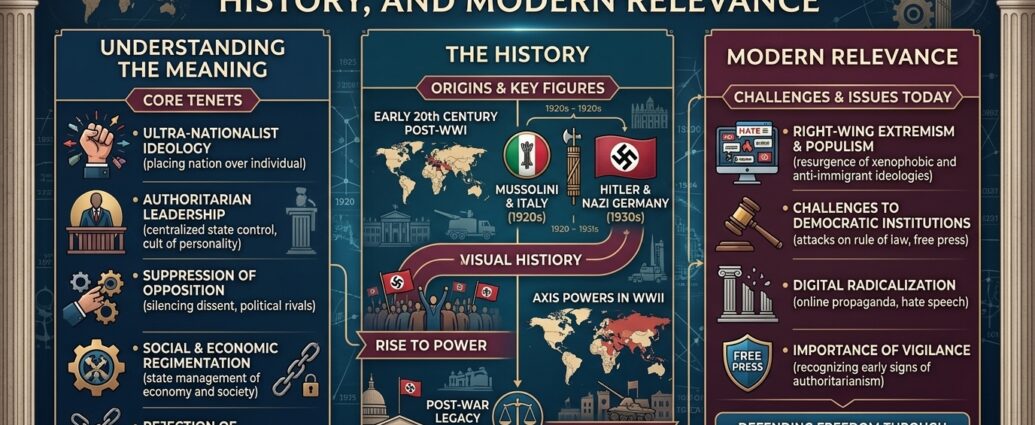
The term Fascisterne carries historical, political, and cultural significance that continues to influence discussions in modern society. Across history, political ideologies have shaped nations, transformed governments, and affected millions of lives. Fascisterne is a term connected to fascism, a political ideology that emerged during the twentieth century and became one of the most controversial movements in world history.
Understanding Fascisterne requires more than simply defining a political label. It involves exploring the historical roots of fascism, the social conditions that allowed it to grow, and the lasting impact it has had on politics, culture, and global history. The topic remains relevant today because political discussions, media debates, and online communities frequently refer to fascism when discussing nationalism, authoritarianism, and social control.
In the modern digital age, historical political terms often return to public conversations in new ways. Younger generations encounter these concepts through documentaries, academic discussions, social media, and online educational platforms. As a result, understanding Fascisterne has become important not only for historians but also for ordinary readers who wish to better understand political language and historical events.
This article explores the meaning of Fascisterne, its historical background, its cultural significance, and its role in contemporary discussions about politics and society.
The Historical Origins of Fascisterne
The roots of Fascisterne can be traced back to the rise of fascist movements in Europe during the early twentieth century. Fascism developed during a period of economic instability, political unrest, and social uncertainty following World War I. Many countries were facing unemployment, national frustration, and weak political systems, creating an environment where extreme political ideologies could gain support.
Fascist movements promised national strength, unity, and order. Leaders associated with these movements often presented themselves as powerful figures capable of restoring national pride and stability. The ideology emphasized centralized authority, nationalism, and obedience to the state.
Historically, fascism became most strongly associated with governments in countries such as Italy and Germany during the 1920s and 1930s. These movements influenced international politics and contributed significantly to the events leading to World War II. The devastating consequences of fascist policies left a lasting impact on global history and human society.
The word Fascisterne itself may appear in certain European languages or cultural contexts when referring to fascists or fascist groups. Understanding the historical meaning behind the term helps readers recognize why it continues to carry strong emotional and political associations today.
Fascism and Political Ideology
To understand Fascisterne fully, it is important to explore the core principles of fascism as a political ideology. Fascism generally promotes strong centralized leadership, extreme nationalism, and the belief that the interests of the state are more important than individual freedoms.
One major characteristic of fascist ideology is authoritarian control. Fascist governments historically limited political opposition, controlled media communication, and reduced democratic freedoms. Supporters often argued that strict leadership was necessary for national unity and strength, while critics viewed these systems as dangerous threats to liberty and human rights.
Another defining feature was nationalism. Fascist movements frequently promoted intense national pride and emphasized cultural or ethnic identity. In some cases, this nationalism developed into discrimination, persecution, and aggressive expansionist policies.
Fascist ideologies also relied heavily on propaganda. Governments used media, speeches, posters, and public events to influence public opinion and strengthen support for political leadership. This focus on propaganda demonstrates how communication and media can shape political attitudes in society.
Although fascism reached its peak during the twentieth century, discussions about authoritarianism and nationalism remain important in modern politics. This is one reason why terms like Fascisterne continue to appear in public debates and educational discussions.
The Social Conditions Behind Fascist Movements
Political ideologies do not emerge in isolation. Fascist movements grew during periods of economic hardship, political instability, and public dissatisfaction. After World War I, many people in Europe faced poverty, unemployment, and social uncertainty. These difficult conditions created frustration and fear among citizens.
In times of crisis, people often seek strong leadership and simple solutions to complex problems. Fascist leaders gained support by promising economic recovery, national unity, and political stability. Their speeches and propaganda appealed to emotions such as pride, fear, and anger.
The rise of Fascisterne also demonstrates how social divisions can influence political movements. Economic inequality, political corruption, and cultural tensions contributed to the growth of extremist ideologies in many countries.
Studying these historical conditions is important because it helps modern societies recognize warning signs of political extremism. Historians and political experts often analyze the rise of fascism to better understand how democratic systems can become vulnerable during periods of instability.
The Role of Media and Propaganda
Media played a powerful role in the spread of fascist ideology. Governments associated with Fascisterne understood the importance of communication in shaping public opinion. They used newspapers, radio broadcasts, films, posters, and public rallies to promote political messages.
Propaganda was designed to create emotional connections between citizens and political leadership. Leaders were often portrayed as heroic figures capable of solving national problems and protecting the country from enemies. Repetition of political slogans and patriotic imagery helped strengthen loyalty among supporters.
Control over media also allowed fascist governments to limit criticism and silence opposition voices. Independent journalism and political debate became restricted in many authoritarian systems. This historical experience demonstrates why freedom of speech and independent media are considered essential elements of democratic societies today.
In the digital age, discussions about propaganda remain highly relevant. Social media platforms, online content, and digital communication can influence public opinion in powerful ways. Comparing modern information systems with historical propaganda methods helps people better understand the relationship between media and politics.
Fascisterne in Modern Cultural Discussions
Today, Fascisterne is not only a historical term but also part of modern cultural and political conversations. Films, documentaries, books, academic studies, and online discussions continue to explore the history and consequences of fascism.
Many creators use historical themes to educate audiences about the dangers of authoritarianism and political extremism. Museums and educational institutions around the world preserve historical records related to fascist movements and World War II to ensure that future generations understand the lessons of history.
In popular culture, references to fascism often appear in movies, novels, and political commentary. Writers and filmmakers sometimes use fictional stories inspired by historical events to examine themes of power, control, resistance, and freedom.
The term Fascisterne may also appear in modern debates about politics and society. However, historians often encourage careful and accurate use of historical language because political labels can be emotionally charged and controversial.
Understanding historical context is essential for meaningful discussions about ideology and political systems. Simplifying or misusing historical terms can create confusion and reduce the quality of public debate.
Education and Historical Awareness
One of the most important reasons for studying Fascisterne is education. Learning about historical political movements helps societies understand the importance of democracy, human rights, and social responsibility.
Educational institutions teach the history of fascism to help students recognize how political systems can affect freedom, equality, and human dignity. Studying history encourages critical thinking and helps individuals evaluate political ideas more carefully.
Historical awareness also promotes tolerance and understanding. By learning about the consequences of discrimination, extremism, and authoritarianism, people can better appreciate the value of diversity and peaceful cooperation.
Online educational platforms have expanded access to historical information in recent years. Readers can now explore documentaries, digital archives, podcasts, and articles about political history from anywhere in the world. This increased access to information has helped younger generations engage more actively with historical learning.
Cultural memory also plays an important role in preserving historical lessons. Memorials, museums, and public commemorations remind societies of past struggles and encourage reflection about the future.
The Digital Age and Political Conversations
The internet has transformed how political ideas are shared and discussed. Terms like Fascisterne can spread quickly through social media, online forums, and digital communities. This rapid communication has both positive and negative effects.
On one hand, digital platforms provide opportunities for education and awareness. Historians, educators, and researchers can share valuable information with global audiences. People can access historical resources and participate in meaningful discussions about politics and society.
On the other hand, online platforms can also contribute to misinformation and political polarization. Simplified or exaggerated political comparisons sometimes appear in online debates, making it important for readers to verify information and consider historical accuracy.
Digital literacy has therefore become increasingly important in modern society. Understanding how media influences public opinion helps individuals navigate political discussions more responsibly and critically.
The continued relevance of Fascisterne in online conversations demonstrates how historical concepts remain connected to modern issues. Political language evolves over time, but historical awareness remains essential for informed discussions.
Why Fascisterne Remains Relevant Today
Even decades after World War II, discussions about fascism and authoritarianism continue around the world. This ongoing relevance reflects broader concerns about democracy, nationalism, political power, and social stability.
Modern societies face new challenges such as economic inequality, political polarization, migration debates, and technological change. During periods of uncertainty, historical comparisons often return to public discussions. Understanding the true historical meaning of Fascisterne helps prevent confusion and promotes more informed conversations.
Historians emphasize that studying the past is not only about remembering events but also about learning lessons that can guide future decisions. Awareness of historical political movements encourages societies to protect democratic institutions, human rights, and freedom of expression.
The topic also remains relevant because younger generations continue seeking knowledge about political history through digital media, educational platforms, and cultural discussions. As global communication expands, historical awareness becomes increasingly important for responsible citizenship and international understanding.
Conclusion
Fascisterne is a term deeply connected to one of the most significant and controversial political ideologies in modern history. Understanding its origins, historical impact, and modern relevance helps readers gain deeper insight into politics, society, and culture.
The history of fascism demonstrates how economic crises, political instability, and social tensions can influence the rise of authoritarian movements. It also highlights the importance of democracy, freedom of speech, independent media, and human rights.
In the modern world, discussions about Fascisterne continue through education, digital media, historical research, and cultural conversations. While the term remains politically sensitive, studying it responsibly provides valuable lessons about leadership, propaganda, nationalism, and the role of citizens in protecting democratic values.
As societies continue evolving in the digital age, historical awareness remains essential. Learning from the past allows people to better understand the present and contribute to a more informed and thoughtful future.